
News | 27/06/2024 | Press Release

Urm1 protects proteins in stress situations

Scientists at the MPI of Biochemistry show that the protein Urm1 protects other proteins in cellular stress situations by promoting phase separation.
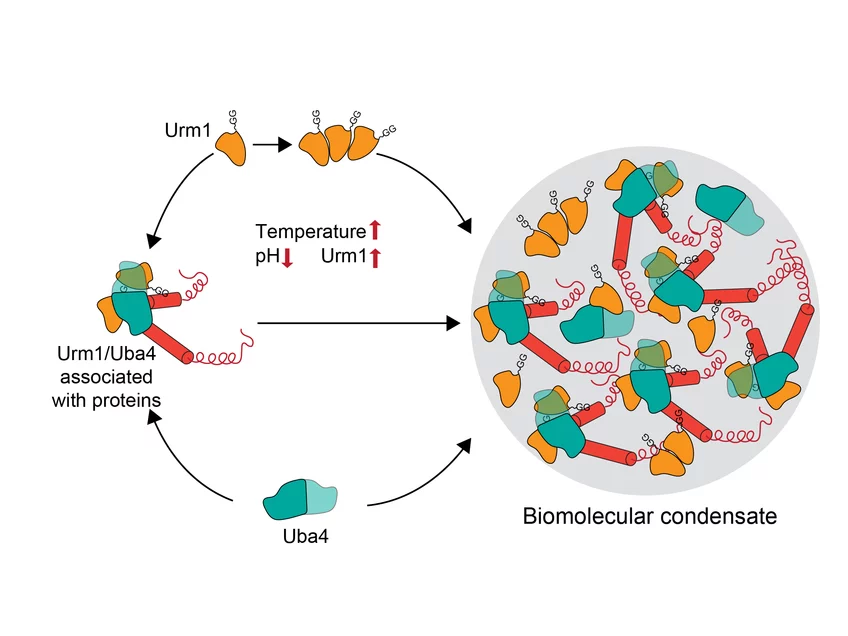
In response to stress, for example, upon temperature increase, cellular pH decreases and the amount of Urm1 increases in cells. Urm1 (orange) self-interacts and associates with other proteins (red) in co-operation with Uba4 (aqua), forming a complex protein interaction network that results in the formation of a biomolecular condensate.  

To prevent proteins from being damaged during cellular stress, they are concentrated in so-called stress granules. Scientists from the department of Cellular Biochemistry at the Max Planck Institute of Biochemistry have now been able to show for the first time that the protein Urm1 has a critical role in this process. In yeast cells, the ubiquitin-like protein facilitates the onset of phase separation and thus the formation of stress granules. The results of the study were published in the scientific journal Cell.