• Zum Hauptinhalt springen
  • Zum Footer springen
  • Deutsch - de
  • English - en

    SyNergy - Mu...

    • About
      • About us
      • Our Measures
      • Members
      • Cluster Management
      •  PhD & Postdoc representatives
      • Scientific Advisory Board
      •  International cooperation partners
      • Timeline
      •  Media Kit
      • Contact
    • News & Events
      • News
      • Events
      • In the News
      • Open Positions
    • Research
      • Publications
      • Our Research Focus
      • Technology Hubs
      • Research Spotlight
      • Research Data Management
      • Sustainability Initiative
      •  Code of Conduct
    • Science & Society
      • For Schools & Students
      • Public Events
      • Podcasts
      • Videos
    • Support for Diversity & Equity
      • Newcomer Center
      • Gender Equality Program
      • Early Career Investigator Program
    1. Home
    2. News & Events
    3. News
    4. New signaling pathway uncovered, shedding fresh light on atherosclerosis
    News | 22/01/2024 | Press Release

    New signaling pathway uncovered, shedding fresh light on atherosclerosis

    A team led by our member Christian Weber and Yvonne Döring has demonstrated new mechanisms that are involved in the development of inflammatory cardiovascular diseases.
    LMU
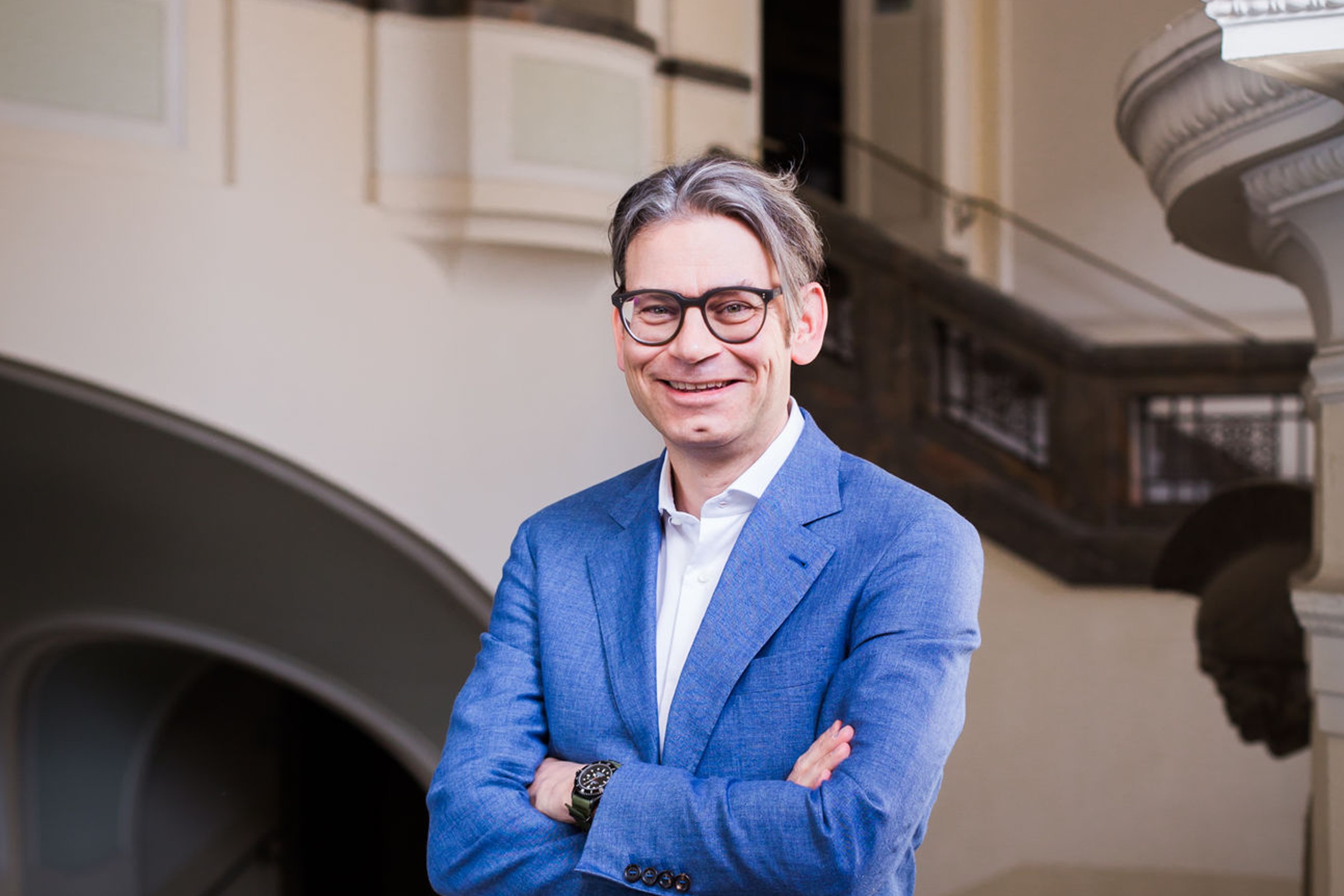
    Christian Weber is Director of the Institute for Cardiovascular Prevention at University of Munich Hospital

    A chronic inflammatory disease of the inner walls of blood vessels, atherosclerosis is responsible for many cardiovascular conditions. Dendritic cells, which act to recognize foreign substances in the body and mount an immune response, play an important role in the disease. They produce the signaling protein CCL17, a chemokine, which influences the activity and mobility of T cells, which track down infected cells in the body and attack the pathogens. However, CCL17 can also promote cardiovascular pathologies. People who suffer from cardiovascular diseases, or are particular susceptible to such diseases, have elevated levels of the signaling protein. In humans and mice, elevated CCL17 serum levels are associated with increased risk of atherosclerosis and inflammatory diseases of the cardiovascular and digestive systems. However, scientists have not yet managed to establish how exactly CCL17 produced by the dendritic cells regulates the T cells.

    A study just published in the journal Nature Cardiovascular Research has clarified important mechanisms in the signaling pathways involved. “We know from our previous work that a genetic deficiency or an antibody blockade of CCL17 impedes the progress of atherosclerosis,” says Professor Christian Weber, Director of the Institute for Cardiovascular Prevention at University of Munich Hospital, Principal Investigator in the SyNergy Cluster of Excellence and one of the lead authors of the new paper. If this receptor is lacking, however, the body is not protected from the negative effects of CCL17, as Weber’s team was able to demonstrate in a mouse study. Mice that did not possess the receptor in question continued to have the same extent of disease driven by CCL17. If the signaling protein acted directly and exclusively on this receptor, then silencing it should have the same effects as the absence of CCL17.

    • Read the full press release on the website of LMU

    Participating Universities
     LMU logo in white
     TUM logo in white
    Partner Institutions
     Logo DZNE in white
    Helmholtz Munich logo in white 
     Logo Max Planck Gesellschaft 

    SyNergy is funded by the Deutsche Forschungsgemeinschaft (German Research Foundation) within the framework of the German Excellence Strategy (EXC 2145 SyNergy – ID 390857198). The Excellence Strategy promotes outstanding research at German universities. 

    Contact

    Munich Cluster for Systems Neurology (SyNergy)

    Feodor-Lynen-Str. 17
    81377 Munich
    +49 (0)89 4400-46497
    yüubgybcјuipaxјn_vfunlyzD mi
    Editor login
    Imprint | Data-Safety