
Early Immune and Synaptic Changes Identified in Parkinson’s Disease
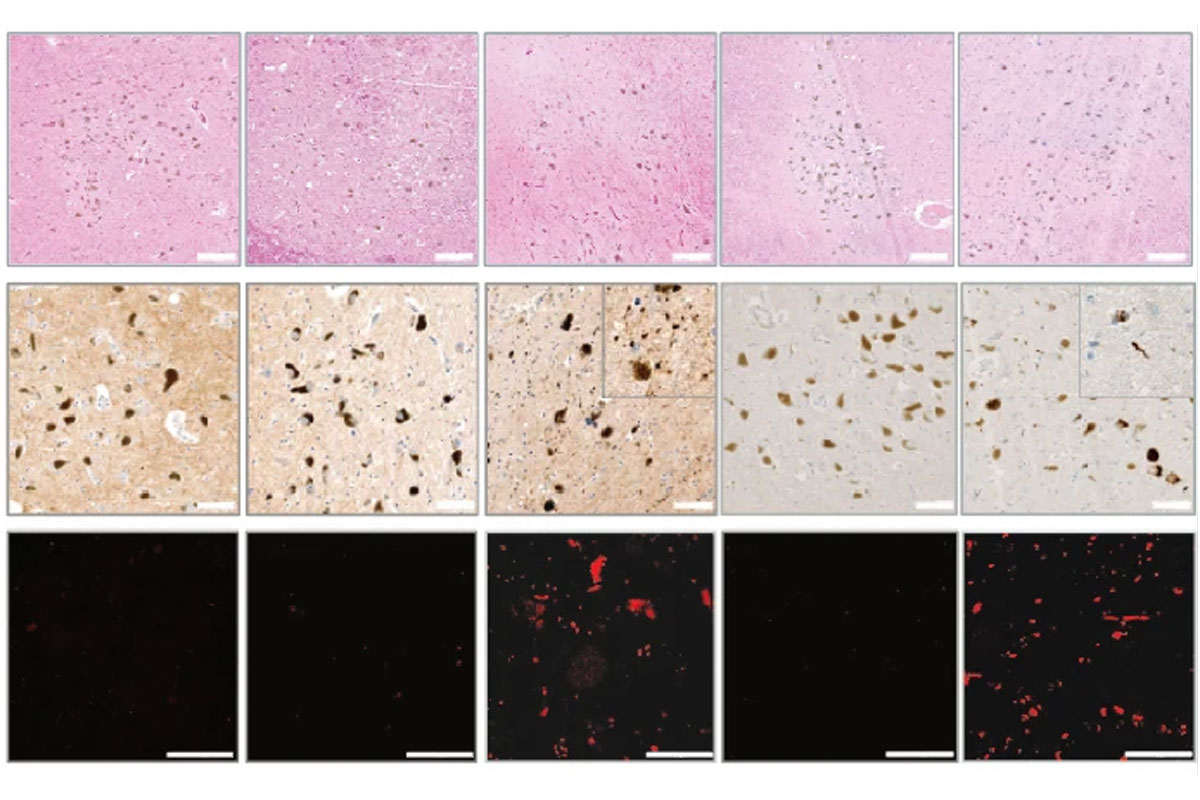
Parkinson’s disease is the second most common neurodegenerative disorder worldwide. One of its defining pathological features is the presence of Lewy bodies—abnormal aggregates of the protein alpha-synuclein in the brain. For many years, these protein deposits have been considered the primary cause of the loss of dopamine-producing neurons. However, a new study by researchers from LMU Munich and the German Center for Neurodegenerative Diseases (DZNE) including SyNergy members Günter Höglinger, Jochen Herms, Stefan Lichtenthaler, and Matthias Brendel, published in Nature Communications, paints a much more complex picture.
The researchers analyzed postmortem human brain tissue from individuals representing different stages of Parkinson’s disease and compared it with brain tissue from people with Alzheimer’s disease, both with and without Lewy pathology. Their analyses focused on dopaminergic neurons, the cells responsible for producing and releasing dopamine, a neurotransmitter essential for movement, motivation, reward, and cognition.
Lewy pathology is not the only driver of neurodegeneration
The study found that the amount of misfolded alpha-synuclein is closely associated with the loss of dopaminergic neurons in classical Parkinson’s disease. Surprisingly, this relationship does not hold true in patients with Alzheimer’s disease who also have Lewy pathology. Despite harboring comparable amounts of alpha-synuclein pathology, these individuals do not exhibit dopaminergic neuronal loss.
These findings indicate that Lewy pathology alone cannot explain neurodegeneration. Instead, the disease context appears to determine whether alpha-synuclein becomes toxic to neurons.
“Our findings show that alpha-synuclein should not be viewed in isolation. It is the interplay with other pathological processes in the brain that determines whether neurons degenerate,” says study leader PD Dr. Thomas Koeglsperger.
Disease-related changes begin long before neurons die
The study also provides important insights into the earliest stages of Parkinson’s disease. In individuals with incidental Lewy body disease—a pathological condition widely regarded as a prodromal stage of Parkinson’s disease—the researchers identified marked changes at neuronal synapses.
Even before classical Lewy pathology can be detected in the substantia nigra, they observed activation of the complement system and a selective loss of inhibitory synapses. These findings suggest that immune-mediated remodeling of neuronal circuits precedes both overt Lewy pathology and the degeneration of dopaminergic neurons.
New opportunities for biomarkers and therapies
The study uncovers previously unrecognized early disease mechanisms. Immune activation and synaptic remodeling may serve as future biomarkers for identifying Parkinson’s disease during its prodromal phase. At the same time, these processes represent promising therapeutic targets that extend beyond alpha-synuclein itself, focusing instead on early inflammatory and synaptic changes.
“If we can learn to target these early changes, we may be able to slow the disease process much earlier—potentially before irreversible neuronal loss has occurred,” says Koeglsperger.
About the study
The researchers combined spatial transcriptomics, spatial proteomics, and alpha-synuclein seed amplification assays (SAAs) on postmortem human brain tissue. This integrated spatial multi-omics approach enabled them to investigate molecular changes at unprecedented spatial resolution and identify novel mechanisms underlying the earliest stages of Parkinson’s disease.