
News | 14/01/2025 | Press Release
SCP-Nano: A new technology to visualize banocarriers in cells and tissues
How can we ensure that life-saving drugs or genetic therapies reach their intended target cells without causing harmful side effects? Researchers at Helmholtz Munich, Ludwig-Maximilians-Universität (LMU) and Technical University Munich (TUM) have taken an important step to answer this question. They have developed a method that, for the first time, enables the precise detection of nanocarriers – tiny transport vehicles – throughout the entire mouse body at a single-cell level. This innovation, called “Single-Cell Profiling of Nanocarriers” or short “SCP-Nano”, combines advanced imaging with artificial intelligence to provide unparalleled insights into the functionality of nanotechnology-based therapies. The results, published in Nature Biotechnology, pave the way for safer and more effective treatments, including mRNA vaccines and gene therapies.
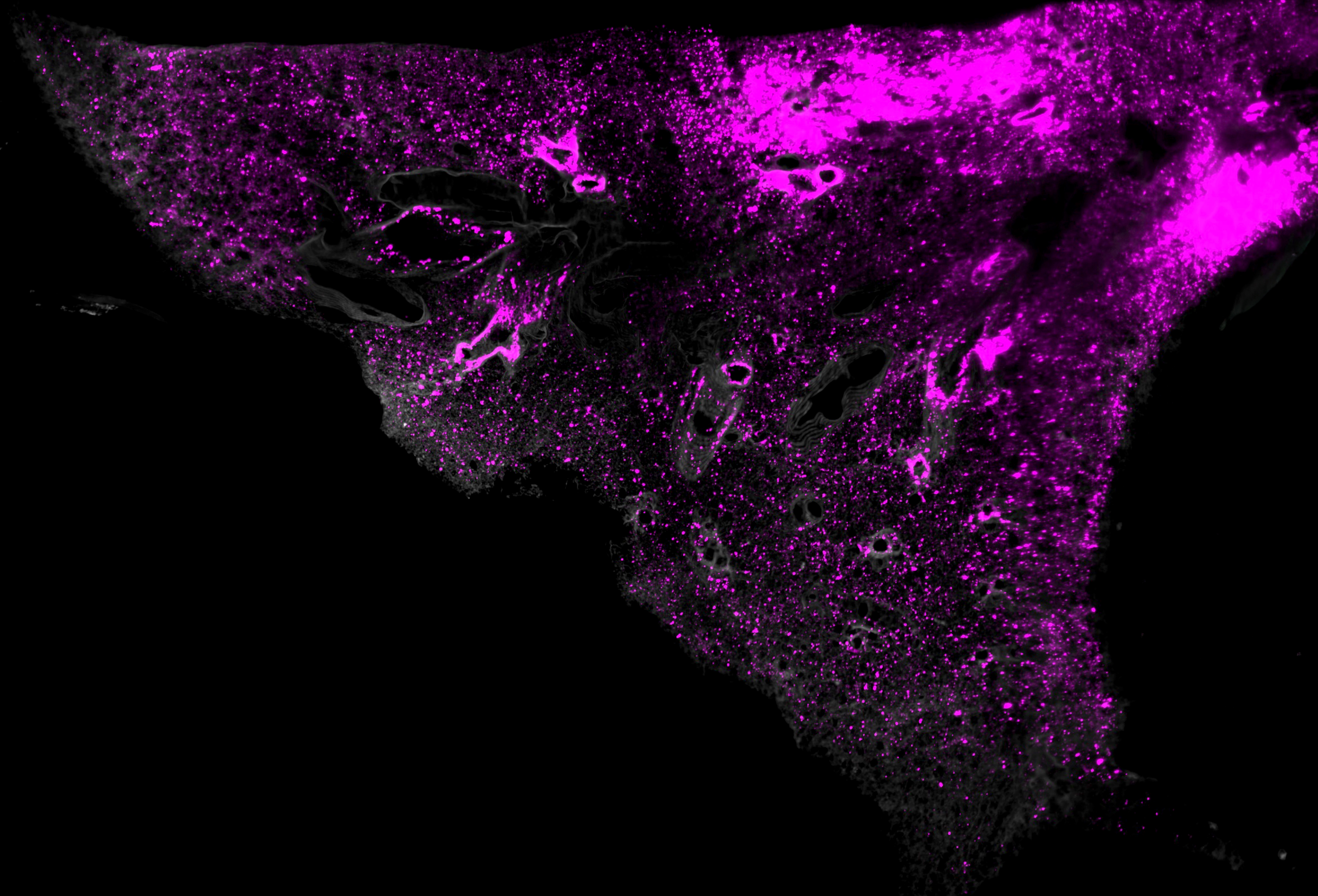
Ali Ertürk / Helmholtz Munich