• Zum Hauptinhalt springen
  • Zum Footer springen
  • Deutsch - de
  • English - en

    SyNergy - Mu...

    • About
      • About us
      • Our Measures
      • Members
      • Cluster Management
      •  PhD & Postdoc representatives
      • Scientific Advisory Board
      •  International cooperation partners
      • Timeline
      •  Media Kit
      • Contact
    • News & Events
      • News
      • Events
      • In the News
      • Open Positions
    • Research
      • Publications
      • Our Research Focus
      • Technology Hubs
      • Research Spotlight
      • Research Data Management
      • Sustainability Initiative
      •  Code of Conduct
    • Science & Society
      • For Schools & Students
      • Public Events
      • Podcasts
      • Videos
    • Support for Diversity & Equity
      • Newcomer Center
      • Gender Equality Program
      • Early Career Investigator Program
    1. Home
    2. News & Events
    3. News
    4. Atherosclerosis: RNA fragment creates prospect for new therapies
    News | 02/11/2023 | Press Release

    Atherosclerosis: RNA fragment creates prospect for new therapies

    Researchers including SyNergy Member Christian Weber have analyzed genetic data from half a million subjects in a search to identify the underlying causes of stroke, a complex vascular disease. Scientists at LMU led the the huge collaborative Project.
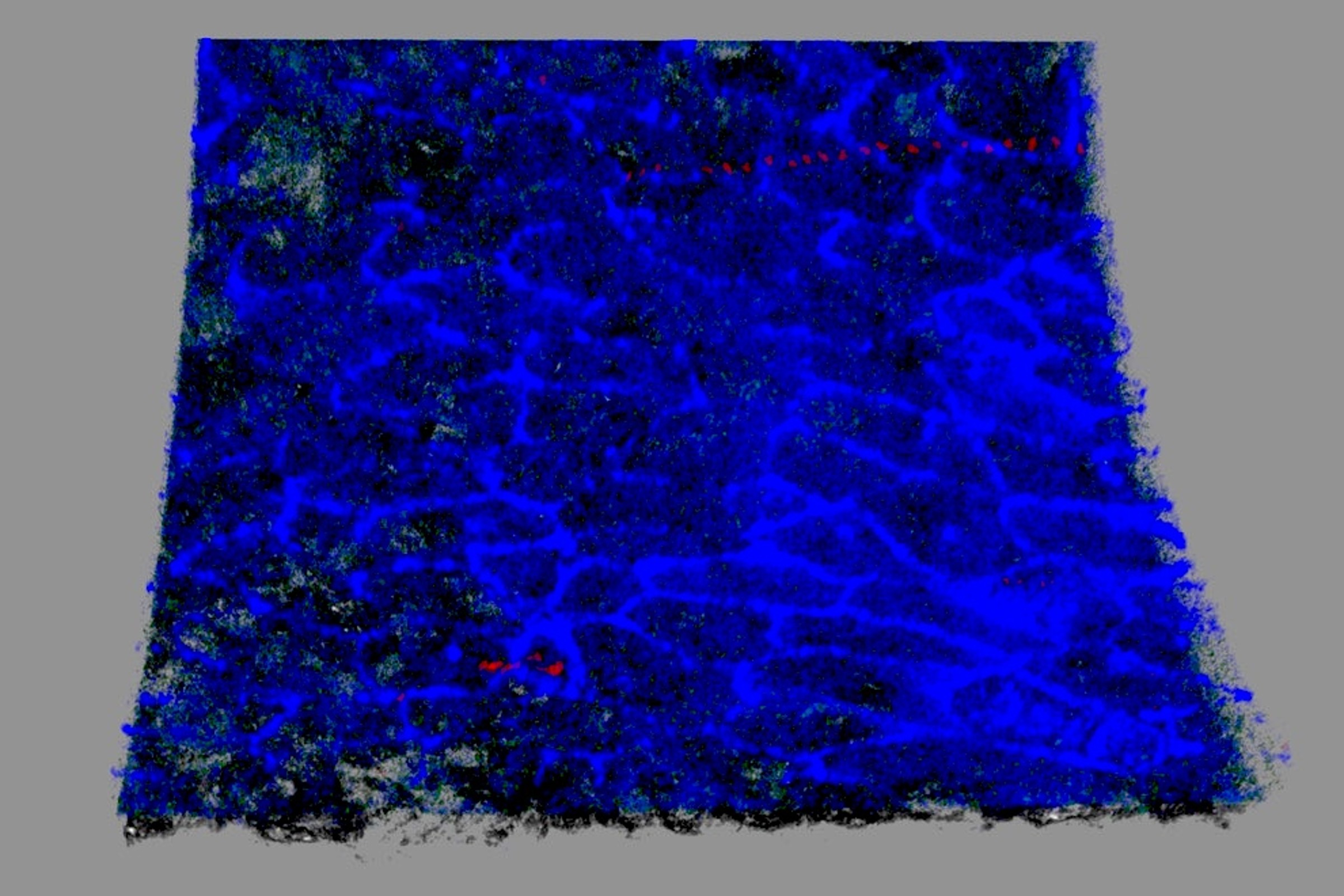
    Inner surface of a carotid artery from a mouse treated with the target site blocker; endothelial protein CD in blue.
    Weber Lab, IPEK

    Atherosclerosis is considered a frequent cause of cardiovascular diseases and strokes. Despite medical progress, case numbers are constantly rising. Targeted new therapeutic approaches are, therefore, more important than ever. An international team led by Professor Christian Weber, Director of the Institute for Cardiovascular Prevention (IPEK) at the University Hospital of Munich, and Professor Donato Santovito, leader of the Translational Vascular Therapy research group at IPEK, has now identified a specific microRNA molecule as a promising starting point for the investigation of new therapies.

    Some time ago, the researchers had already demonstrated that the transmembrane protein CXCR4 plays a significant role in the development of atherosclerosis. The protein transmits signals to the cell interior. If CXCR4 is specifically silenced in arterial endothelial cells or in smooth muscle cells, it results in more severe atherosclerotic lesions. At the same time, there is increased leukocyte ingress into the cell, which leads to inflammatory processes. With regard to leukocytes, however, the presence of CXCR4 can also promote the development of inflammatory processes. “It made sense, therefore, to only boost the expression of CXCR4 on the cells of the vascular wall in order to counteract the atherosclerosis,” says Santovito. “The challenge, however, is not to influence any biological processes, as the protein occurs in all cells and exercises various important functions.”

    • Read the full press release on the LMU website

    Participating Universities
     LMU logo in white
     TUM logo in white
    Partner Institutions
     Logo DZNE in white
    Helmholtz Munich logo in white 
     Logo Max Planck Gesellschaft 

    SyNergy is funded by the Deutsche Forschungsgemeinschaft (German Research Foundation) within the framework of the German Excellence Strategy (EXC 2145 SyNergy – ID 390857198). The Excellence Strategy promotes outstanding research at German universities. 

    Contact

    Munich Cluster for Systems Neurology (SyNergy)

    Feodor-Lynen-Str. 17
    81377 Munich
    +49 (0)89 4400-46497
    yüubgybcјuipxnј_vfulyz mi
    Editor login
    Imprint | Data-Safety