The challenge
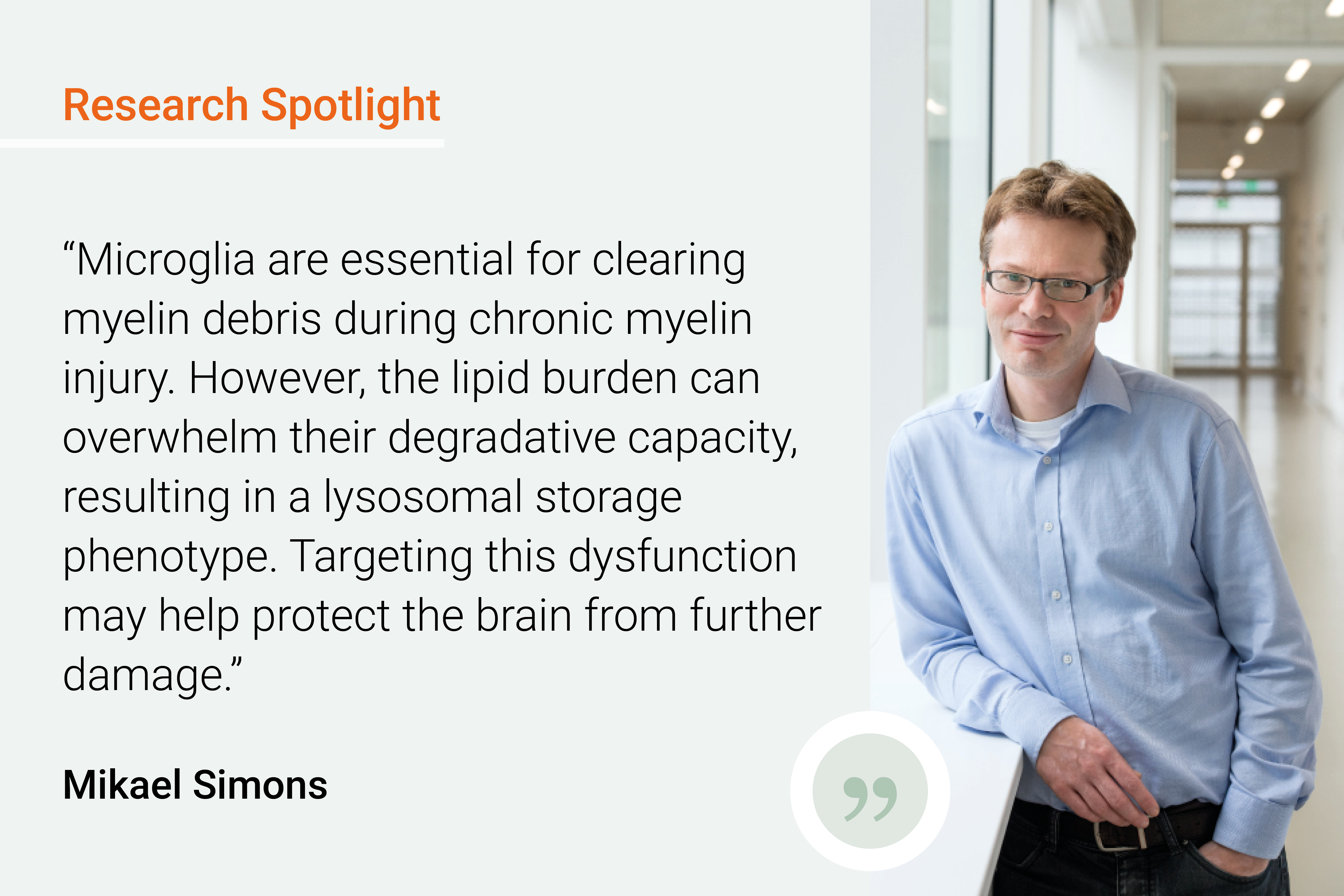
Multiple sclerosis and other demyelinating disorders involve damage to myelin, the protective sheath surrounding nerve fibres. While the immune and metabolic responses to acute myelin damage are relatively well understood, much less is known about how the brain responds to persistent, chronic damage. Microglia play a central role in clearing damaged myelin and supporting tissue repair. However, prolonged exposure to myelin debris may alter their function and contribute to ongoing inflammation and neurodegeneration. Understanding how microglia adapt to chronic demyelination is therefore essential for identifying mechanisms that prevent effective tissue repair and drive disease progression. In particular, the role of lipid metabolism in regulating microglial activity remains insufficiently understood.
Our approach
The researchers compared genetic, toxic and autoimmune mouse models of acute and chronic demyelination. They combined transcriptomic analyses, lipid and sterol profiling, histological examinations and electron microscopy to investigate microglial states and cholesterol metabolism. They also tested whether pharmacological modulation of cholesterol metabolism could restore microglial function.
Our findings
The study identified a distinct microglial state associated with chronic demyelination. These cells showed sustained pro-inflammatory activity and accumulated lipids within their lysosomes, while exhibiting reduced lipid droplet formation. Molecular analyses revealed increased cholesterol synthesis alongside impaired cholesterol export, indicating disrupted lipid processing. Importantly, treatment with a desmosterol mimetic that inhibits the enzyme DHCR24 reversed this dysfunctional microglial state. The treatment also reduced inflammatory signalling, including CCL4 expression, and limited myelin damage. In a mouse model of leukodystrophy, these effects were accompanied by improved motor performance, highlighting the therapeutic potential of targeting microglial lipid metabolism.
The implications
These findings reveal a link between cholesterol metabolism, lysosomal function and chronic neuroinflammation. Restoring microglial lipid processing could represent a promising therapeutic strategy to limit progressive myelin damage and support brain repair.
Creating SyNergies
The study was conducted by an international research team led by Stefan A. Berghoff and Mikael Simons, involving SyNergy members and collaborators from Munich and other research institutions. The project combined expertise in neuroimmunology, lipid metabolism, molecular biology and advanced imaging to investigate microglial dysfunction and identify potential therapeutic targets.