The challenge
Progressive multiple sclerosis remains an urgent clinical challenge because current therapies target relapses and fail to stop disability accumulation. A major driver of progression is compartmentalized inflammation within the central nervous system, organized into autonomous niches called meningeal tertiary lymphoid structures (TLS). These aggregates accumulate autoreactive T and B cells, which fuel demyelination and neuroinflammation independently of the peripheral immune system. Standard treatments, such as anti-CD20 therapies that deplete circulating B cells, are mostly ineffective at clearing these intrathecal structures. Therefore, finding a selective molecular pathway to break up these autonomous clusters and stop chronic damage inside the brain remains a critical necessity for patients.
Our approach
We utilized a spontaneous opticospinal encephalomyelitis mouse model that replicates the clinical dynamics and histological features of human progressive MS. To disrupt the compartmentalized niches, we systemically administered a monoclonal antibody targeting the CD40L-CD40 costimulatory pathway and compared its efficacy with conventional anti-CD20 treatments.
Our findings
We found that systemically applied anti-CD40L therapy successfully dismantled T-B cell interactions and cleared meningeal structures. This led to a significant clinical improvement and prevented disease progression. Furthermore, anti-CD40L treatment reduced cerebrospinal fluid levels of key inflammatory markers like CXCL13 and profoundly remodeled multiple antigen-presenting cells in the central nervous system, including astrocytes and myeloid cells.
The implications
These findings establish anti-CD40L therapy as a powerful intervention to eliminate progressive immunopathology associated with meningeal structures. It provides a strong rationale for testing anti-CD40L in clinical trials for progressive multiple sclerosis.
Creating SyNergies
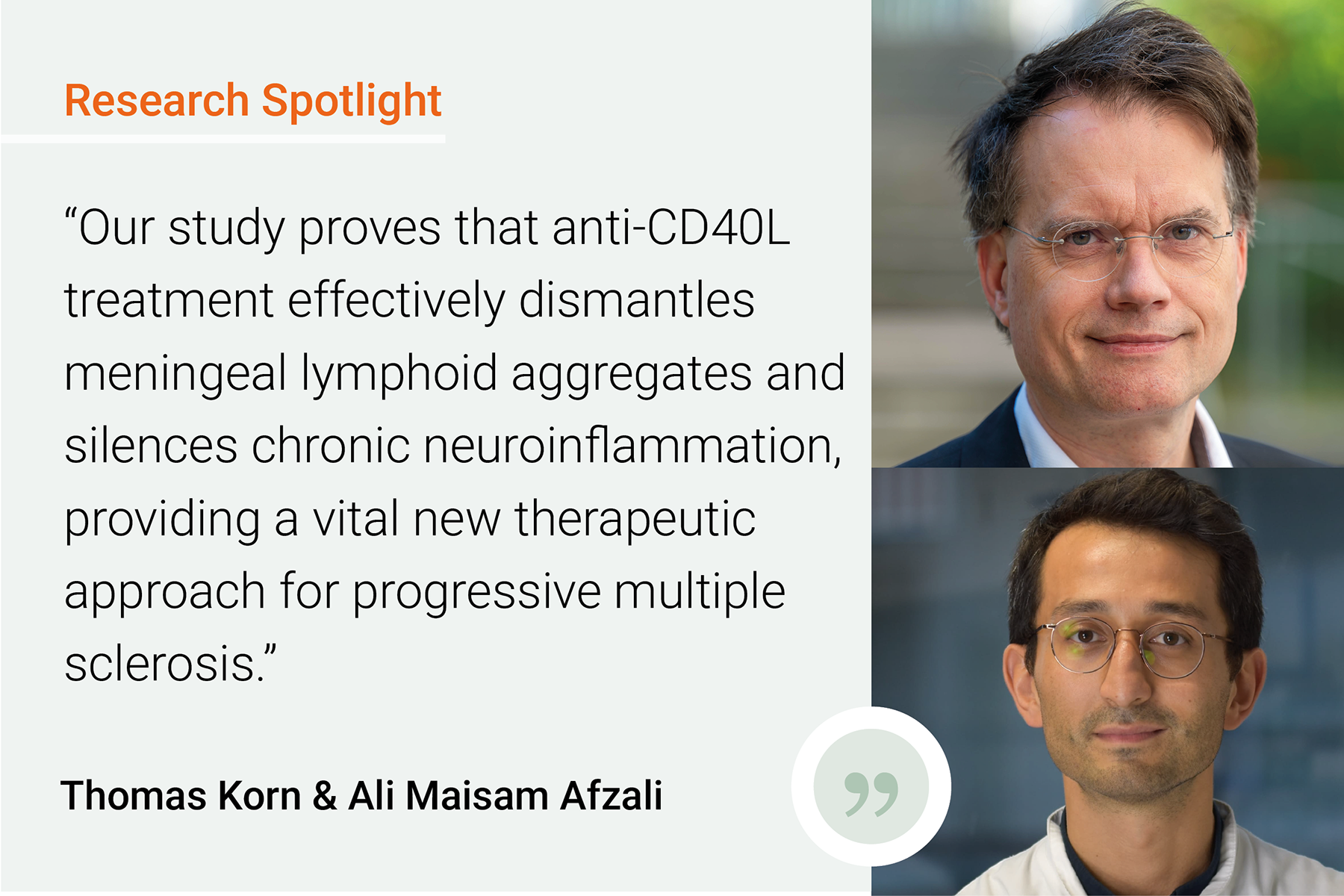
The study was led by our members Ali Maisam Afzali and Thomas Korn. By combining single-nucleotide RNA sequencing and advanced histology, our team successfully demonstrated how blocking the CD40L-CD40 pathway selectively silences disease-relevant immune interactions inside the central nervous system