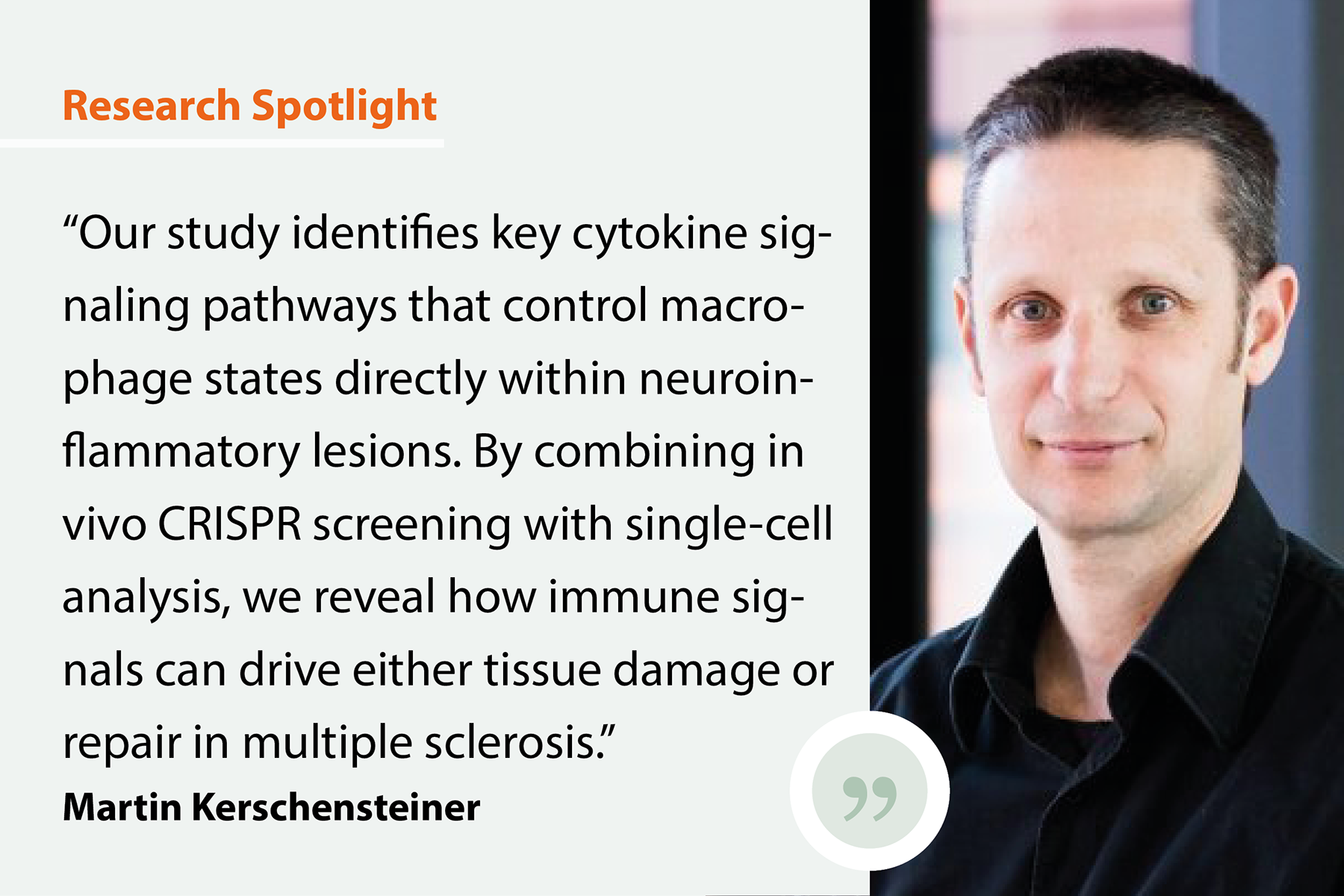
This is a summary of Clara de la Rosa, Arek Kendirli et al. In vivo CRISPR screen reveals regulation of macrophage states in neuroinflammation. Published in Nature Neuroscience (2025). DOI: 10.1038/s41593-025-02151-6
The challenge
Inflammatory diseases of the central nervous system, like multiple sclerosis, involve complex macrophage responses that can both drive tissue damage and promote repair. However, the molecular signals that steer macrophages toward beneficial or detrimental states in vivo remain poorly defined.
Our approach
We developed an in vivo pooled CRISPR/Cas9 screening platform, targeting over 100 immune signaling genes in myeloid progenitors, and analyzed their effects directly in neuroinflammatory lesions using single-cell transcriptomics and in vivo imaging.
Our findings
The screen revealed that interferon-γ and TNF signaling drive pro-inflammatory macrophage programs, while TGF-β and GM-CSF promote states associated with tissue remodeling and lesion resolution. These cytokine-regulated macrophage states showed distinct transcriptional signatures that were used to probe cytokine actions in multiple sclerosis.
The implications
This functional map of cytokine control over macrophage states provides targets for therapies that could limit inflammation and enhance repair and the in vivo CRISPR platform itself is a powerful tool for dissecting myeloid cell regulation in neurological disease.
Creating SyNergies
This work integrates expertise across SyNergy labs specializing in CRISPR technology, single-cell analysis, and neuroimmunology, highlighting the translational potential of collaborative systems neuroscience research.